The federal program behind Canada's quietest wealth strategy.
Canada's federal housing agency, CMHC, runs a program called MLI Select. It lets qualified buyers finance new eight-unit rental buildings at up to 95%, amortized over as long as 50 years. Almost nobody outside the industry knows how it actually works: the real costs, the real tests, the real math. This is where you learn it. And where access begins.
No cost · No documents · Unsubscribe anytime
Most buyers assume 25% down is the law. Here it isn't.
Extended amortization carries a surcharge. We show it.
Federal rebate, structure-dependent.
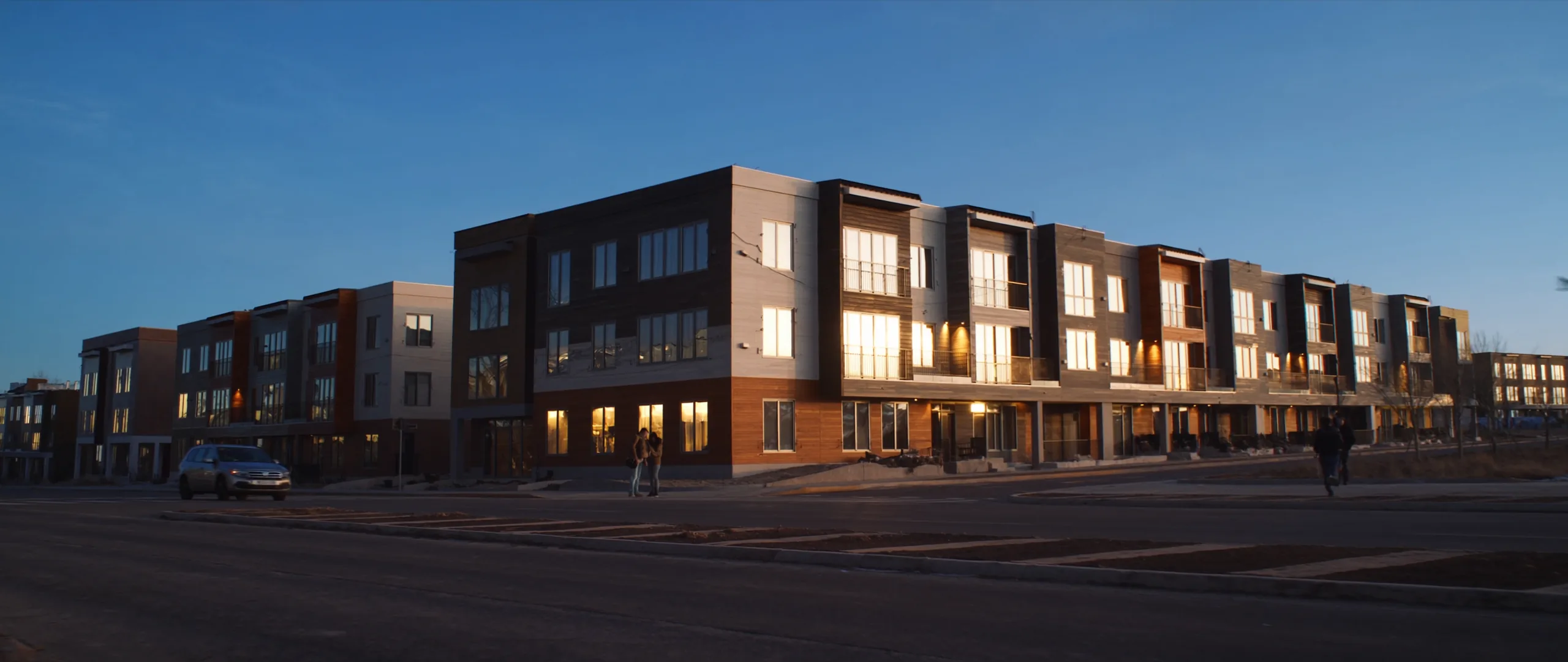
Four family homes over four legal suites.
Three things the industry knows that you weren't told.
The asset
A purpose-built rental is a building designed from day one to be rented, not sold off in pieces. The typical version here is eight homes on one parcel: four family-sized units over four legal suites. One title, eight rent cheques. Unlike a condo, it is valued on the income it produces, which changes everything about how it is financed.
The program
CMHC insures the loan, so lenders can extend terms that exist nowhere else in Canadian real estate: higher leverage, longer amortization. The program exists to get rental housing built. Projects earn points for energy efficiency, accessibility, and affordability, and the points decide the terms. It is policy doing the lifting, not a trick.
The geography
The math has to survive the price of land, and in most of BC and Ontario it doesn't. Alberta is different: no provincial sales tax, no land transfer tax, the country's strongest in-migration, and roughly twice the building per dollar. The same program exists everywhere in Canada. It pencils here.
What entry actually looks like.
These are category bands, not listings. They exist so you know the scale of the commitment before anyone asks for a minute of your time. Your real numbers come out of underwriting, nowhere else.
Illustrative only · Not an offer · Terms set by CMHC and approved lenders
The Alberta 8-Door Blueprint
The full math of one real, closed CMHC-financed 8-door: the version the brochure never shows.
- The builder's proforma, then the complete picture: insurance premium, surcharges, fees, true cash to close
- The stress test lenders actually run, and how it resizes the loan
- The three bars every buyer must clear (net worth, liquidity, status) with the numbers pre-computed
- The experience rule that stops most first-time buyers, and the professional-management route around it
- The five mistakes that kill first applications
The program sets real bars. Here they are.
MLI Select sets real bars. Roughly: net worth near 25% of the loan, which is about $760K on a typical 8-door, liquid reserves of about $100,000 beyond your down payment and closing costs, and Canadian citizenship, permanent residency, or qualifying status. There is also an experience requirement: five years, or a professional manager under contract, which is how most first-time buyers clear it.
Close on one or two of these? The review exists to map your path. Clear of all of them? You're exactly who the network was built for.
Three steps. No documents up front.
Request access
Three questions about your mandate, under a minute. What you're targeting, how you'd hold it, what you own today. Never your income, never your net worth, never documents.
Private review
Twenty minutes with the desk. We map your position against the program's published bars, privately, and answer everything. Bands only, never documents, never exact figures.
Introductions
Licensed builder representatives and MLI-specialist mortgage professionals present current projects matched to your mandate. You decide from there. We are the introduction, not the transaction.
Access is requested, not browsed.
Three questions about your mandate, not your money. Reviewed within 48 hours.
What acquisition range are you targeting?
This sets which pipeline lines fit your mandate. It's a target, not a commitment.
Why can't I see any projects on this site?
I've never owned a rental property. Can I actually do this?
What's the catch?
Why is this free? What's in it for you?
One email a month. The state of the strategy.
What changed in the program, what the desk is seeing, and the month's numbers. Written plainly, no selling.